IVD performance evaluation: A guide to tailoring your strategy to the risk class (A, B, C, D)
You’re developing an in vitro diagnostic (IVD) device and wondering about the differences between IVDR classes A, B, C, and D and how they affect your performance evaluation?
Wine production: flow cytometry validated by the OIV
Flow cytometry is officially recognised as a benchmark method for monitoring yeast viability in musts and wines. Resolution OIV-OENO 713A-2025, formalised by the International Organisation of Vine and Wine (OIV), marks a major step forward for the wine industry.
Measuring wine yeast autofluorescence by spectral cytometry: a breakthrough in fermentation monitoring
Yeast autofluorescence increases significantly as the cells age, reaching a maximum when the cells are dead. This phenomenon can bias analysis results, if not differentiated from other background signals.
Expertise, impartiality and ISO17025: Amarok Biotechnologies’ LEP at the service of medical devices
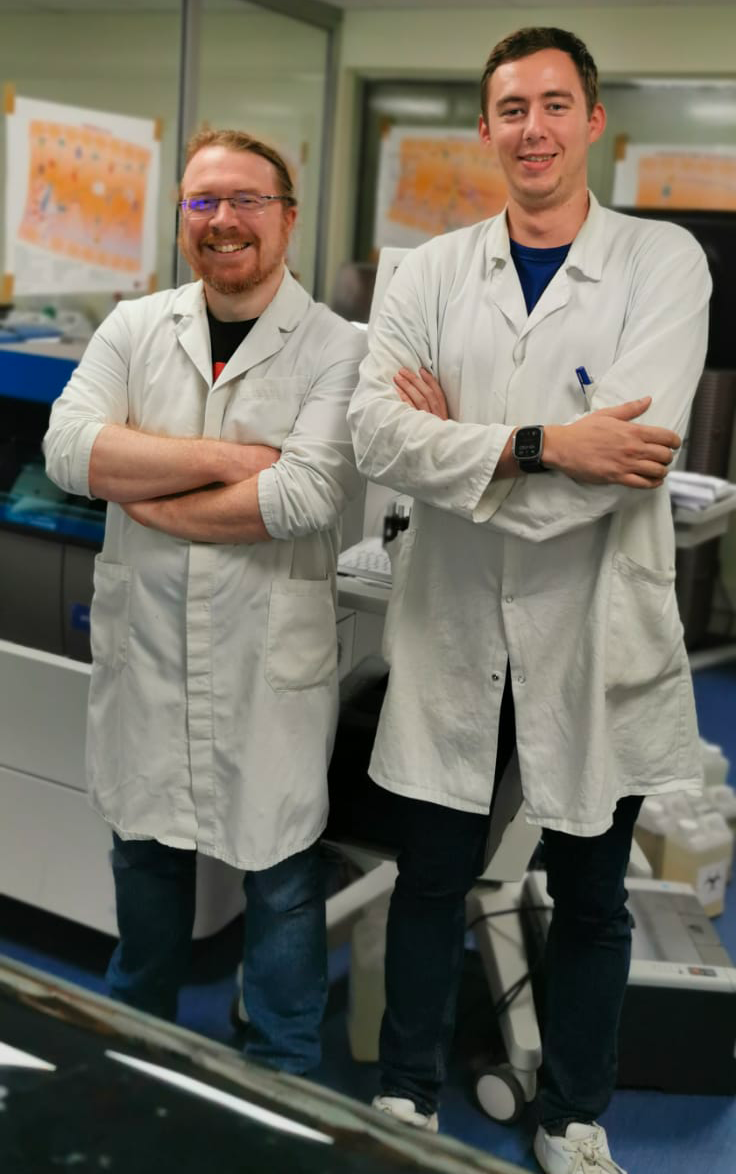
Ludovic Chaillet, engineer at LEP, and Alexandre Rivoallan, reference technician, share their expertise on the evaluation process and explain why manufacturers call on Amarok Biotechnologies to validate their products.
The administrative challenges of IVDR Regulation 2017/746
Explore the administrative constraints related to this new regulation and the organizational implications for the in vitro diagnostic medical device (IVD) industry.
Amarok Biotechnologies, a French performance evaluation laboratory, renews its ISO 17025:2017 accreditation with an extension to blood group immunohematology
Adapting yeast vitality measurement to winemaking routines production routine
Winemaking is based on alcoholic fermentation which induces the transformation of grape sugar into ethanol, mainly under the action of Saccharomyces cerevisiae.
Evaluation of analytical performance of the sthemO DDi M assay on the sthemO 301 analyzer
D-dimers (DDi) arise from the degradation of fibrin by plasmin. Precise measurement of their levels is essential for managing the risk of venous thromboembolism in ambulatory patients or in monitoring disseminated intravascular coagulation.